

 LinkedIn
EuroGNC 2026 is pleased to feature a series of Plenary and Semi-Plenary talks delivered by leading researchers and practitioners in guidance, navigation, and control. These keynote presentations provide insights into cutting-edge developments, innovative methodologies, and the future of the field. The invited speakers and their talks are listed below.
Plenary talks
Tuesday May 5th, 09:30-10:30
Advances in Active Flow Control, Control Allocation, and L1 Robust Control

Speaker: Michael Niestroy, Ph.D., Lockheed Martin, Senior Fellow for Control Sciences
Short Bio: Dr. Niestroy is a member of Lockheed Martin’s Advanced Development Programs (ADP) team, also known as Skunk Works. He has been at Lockheed Martin (LM) for 28 years with his focus mainly on control-related research and development. Mike has participated in three NATO-sponsored R&D programs that included formation flight for fuel efficiency, active flow control, and control allocation. He has participated in over thirty R&D projects, funded both internally by LM and externally by many US government agencies and participation with small businesses and universities. Dr. Niestroy was also an adjunct professor of electrical engineering at The University of Texas at Arlington for over eleven years, teaching control-related graduate classes.
Abstract: This talk focuses on three control-related research and development efforts involving Lockheed Martin Skunk Works. The first two are part of NATO-sponsored Applied Vehicle Technology (AVT) efforts; one long-standing effort on maturing active flow control for aircraft and the second on flight testing of control allocation methods on a small remotely piloted vehicle. The third part of the presentation highlights our efforts in developing a bolt-on L1 robust control methodology. For this last topic, some of the underlying concepts are presented first, followed by flight test results of those algorithms on the X-62A VISTA at the US Edwards Air Force Base facility. Results are shown in graph form along with a short HUD video. The presentation wraps with some going-forward thoughts on the technologies discussed.
Wednesday May 6th, 09:00-10:00
Title: to be announced soon
Thursday May 7th, 09:20-10:20
Current and future developments of on-board autonomy in GNC systems at ESA
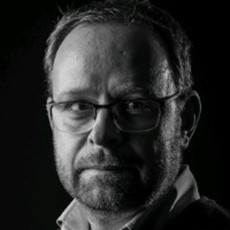
Speaker: Massimo Casasco, ESA
Short Bio: Massimo Casasco works at the European Space Research and Technology Centre (ESTEC) of the European Space Agency, where he is the Head of the GNC Systems Architecture Section in the Electrical Engineering Department.
Massimo has been working at the European Space Agency for 15 years, where he has previously worked as Guidance Navigation and Control System Engineer supporting the BepiColombo mission to Mercury as well as other interplanetary and exploration missions (Mars Sample Return, EnVision, HERA, to name a few). He has also managed several R&D studies and technology developments in the domain of GNC.
Previous to his work at ESA, Massimo has covered various positions in both the space and aviation industry: he was AOCS design engineer and analyst on a number of space missions, including ESA missions Herschel, GAIA, and GALILEO. He also worked as Flight control engineer at the development of the fly-by-wire Flight Control System of advanced military aircraft.
Abstract: This presentation reviews current and future developments in spacecraft on-board autonomy at the European Space Agency, focusing on the technologies and mission scenarios driving the need for increasingly autonomous space systems. Autonomy can be defined as the capability of a spacecraft to achieve mission objectives while operating independently of external control. Such capabilities become essential when communication delays, limited bandwidth, or rapidly changing environmental conditions prevent timely intervention from ground control. Historically, spacecraft autonomy has been implemented through time-tagged command sequences, fault detection, isolation and recovery (FDIR), and basic navigation and control functions. However, upcoming missions require significantly more advanced autonomous capabilities that move analysis, planning, and decision-making functions on board the spacecraft.
Several mission domains motivate this evolution, including planetary entry, descent and landing, small-body exploration, opportunistic science observations, rendezvous and proximity operations, multi-spacecraft coordination, aerobraking, collision avoidance in low Earth orbit, and controlled de-orbit. These scenarios require spacecraft to operate safely and efficiently in uncertain and dynamic environments. Key enabling technologies include autonomous navigation, terrain-relative and vision-based navigation, real-time guidance, hazard detection and avoidance, autonomous mission planning and re-planning, and on-board science event detection.
Autonomous spacecraft architectures are often structured in multiple layers, combining supervisory decision functions, intermediate optimisation and planning modules, and low-level guidance and control systems responsible for stabilisation and trajectory tracking. Advanced techniques such as convex optimisation, model predictive control, and artificial intelligence approaches—including reinforcement learning and data-driven algorithms—are being investigated to enable real-time mission optimisation and adaptive decision-making.
These developments illustrate the growing role of autonomy in enabling complex, robust, and efficient space missions, particularly in environments where pre-planned operations alone are insufficient to guarantee mission success.
Semi-Plenary talks
Tuesday May 5th, 14:00-15:00
Navigation Technologies for Space Transportation Systems: new developments and trends

Speaker: Sergio Ramirez, SENER
Short Bio: Sergio is an aerospace engineer with a master’s degree in Aerospace Engineering, with specialty in Space Vehicles, by the Technical University of Madrid. He has almost 10 years of experience in the area of navigation data fusion and sensors, systems engineering and project management. He works at Sener Aerospace and Defense as a Product Line Leader for Hybrid Navigation Units, which include the development and production of navigation systems for space transportation (like the NAVIGA unit for the VEGA-C and VEGA-E) and autonomous flight termination systems for launchers.
Abstract: Navigation technologies for space transportation systems are evolving rapidly to meet the demands of higher autonomy, lower costs and improved robustness and performance. This lecture presents a comprehensive overview of the current state of the art in spaceborne navigation, followed by an in-depth focus on the development, achievements, and roadmap in this domain.
The first part of the talk surveys major technological trends shaping modern launcher navigation. An initial overview of the evolution from traditional high-end inertial navigation systems to current multisensor architectures. Progress in inertial navigation systems, from radiation tolerant high grade IMUs to increasingly performant MEMS units, and in GNSS processing, with dynamic signal tracking, and on board authentication, is reviewed together with hybridization strategies that enable robust and cost-effective performance through the most demanding flight phases. Emerging technologies such as quantum inertial sensors and AI assisted filtering are also addressed. The role of advanced estimation algorithms, and integrity monitoring is discussed as a cornerstone for shortening development cycles and reducing costs.
The second part of the presentation focuses on Sener’s work in developing space transportation navigation systems. Results from several projects covering from ascent, orbital, and re-entry operations are presented where it was looked at the use of high-dynamic GNSS processing, loosely and tightly coupled GNSS/INS fusion, robust integrity management, multisensor integration and safety-critical avionics architectures. This work has been developed by Sener in several developments of navigations units, NAVIGA and NAVIGA-EVO.
By bridging the global technological landscape with concrete industrial developments, the presentation offers a clear view of where launcher navigation stands today, and how systems like NAVIGA and NAVIGA EVO will shape the next decade of resilient, competitive, and autonomous space transportation.
Wednesday May 6th, 14:30-15:30
Automation and Certification of Unmanned Aircraft
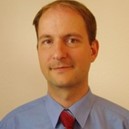
Speaker: Winfried Lohmiller (& Manuel Barriopedro), Executive Expert, Airbus
Short Bio: Winfried Lohmiller is an Executive Expert at Airbus Defence and Space for ‘Overall Aircraft System’. He joined DaimlerChrysler Aerospace (the precursor of Airbus Defence and Space) in 1998 in Munich. Since then, he has supported the technologies and development of different unmanned aircrafts (SLG Sys, Barracuda, Talarion, Zephyr) as well as hydrogen driven aircrafts (Tanan and Eurodrone) in different leadership roles. He started his career in the Flight Control System of Eurofighter. Afterwards he supported as GNC Senior Expert the development of the A400M mission and navigation system and the Eurofighter’s communication system. Today his focus is the provision of technologies for the Next Generation Weapon System. He is the Airbus DS representative at DGLR, AAE and BDLI Forum Luftfahrt.
He graduated in 1996 in Aerospace Engineering from the University of Stuttgart. He then took a Ph.D. at MIT in Mechanical Engineering. Since 1995 he is scientist at the MIT Nonlinear System Lab where he and Prof. Slotine invented ‘Contraction Theory’ which became today a standard stability technique to investigate nonlinear system dynamics.
Abstract: Remotely Piloted Aircraft Systems (RPAS) have become more and more present in our civil life. In addition, they get more and more relevant for state and military applications. This presentation first summarizes key missions and applications of RPAS, differentiating the aircraft in range versus payload. Based on a standard generic RPAS architecture the basics of mission autonomy, intelligence, level of autonomy and operator influence are introduced. This is illustrated for the case of Sirtap or Eurodrone. Then the key certification principles of RPAS are introduced. This is illustrated on the decomposition of aircraft loss rate (CS-25 or STANAG-4671) with the goal to protect persons on the ground. Specific key issues on the certification are illustrated for the following examples: Redundant pitch control; Automation, covering emergency responses or contingency management; Redundancy of engines vs. Crash sites; Collision avoidance for RPAS; Certifiable ATOL; and Airframe & FCS design.